
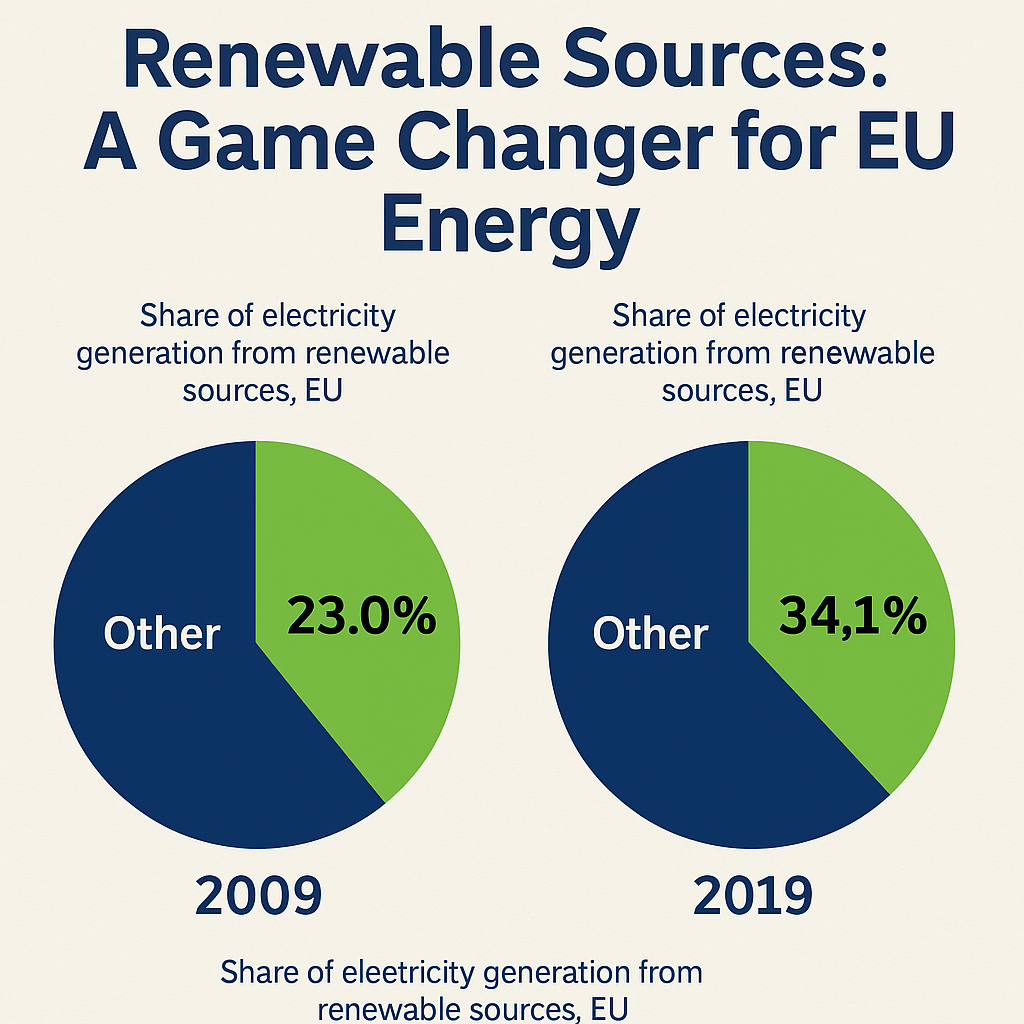
For the first time in history, in 2019, the EU countries generated more energy using renewable sources than coal. According to the recent report, it was the sharpest reduction in the European power sector’s carbon emission in three decades. A solar plant developer Sun Investment Group explains strategies to increase renewable energy production. They discuss ways to speed up the transition within the region.
EU Replacing Coal
February 24, 2020. 2019 was the first year when European Union member countries generated more energy using renewable sources than from coal production. Europe is getting closer to phasing out coal production and replacing it with sustainable sources. The EU generates around 30% of its energy from renewable sources, like wind, solar, and biomass. For comparison, this number was only 12% in 2000. With new milestones, by 2030, the EU is planning to generate 50% of its energy using renewables sources.
Deividas Varabauskas is the CEO and Managing Partner at Sun Investment Group, he explains the reasons behind these changes. “There are many factors determining energy generation within the European Union. This sharp decrease in hard coal production happened due to increased taxation on CO2. For the growth of renewable sources,” said Varabauskas. “Of course, there’s still a long way to go. Only five countries including Germany, Spain, the Netherlands, UK, and Italy were responsible for 79% of this decrease. If other member countries would follow, we will see much more prominent results.”
 Infographic shows the shift in EU energy consumption, highlighting an increase in renewable sources from 2019 to 2020.
In 2019, coal production dropped by 24% which is a lot. Yet, it also quickened the coal phasing out process. Gas filled half of the difference, solar and wind replaced the other half of the gap. More Union’s countries agree on reducing coal usage. Soon renewables will take the wheel of energy generation in the EU.
Slow Transition to Sustainable, Renewable Sources
Since the first Industrial Revolution, 2019 was the first year in which clean energy sources outran coal. With time these changes should accelerate. More member countries are joining sustainable energy initiatives to reduce coal production. They aim to replace it with sustainable sources. This makes the transition faster and more possible.
A decrease in energy consumption in both western and eastern Europe had a major impact. This led to a sharp decline in coal production. Not only consumers used less energy, but also industrial usage dropped.
Renewable energy is getting more affordable, which increases its availability for individual consumers. In 2019, Portugal broke the solar energy price record by selling for 14.76 euros per megawatt-hour (MWh), while the same year the lowest price was still at 16.7 euros MWh in India.
Deividas Varabauskas adds that governments play a significant role in promoting and developing renewable energy plans. He states, “After many years of working in the renewable energy sector, we noticed several important factors. If a country seeks to switch to renewables, it’s necessary to focus not only on power acquisition agreements. It is also crucial to focus on energy auctions.”
Yet many countries make the same mistake. They start with auctions and stop further development. They expect that the market itself would do the rest. But auctions with a fixed price is a surefire way to stable renewables growth. It ensures that investors, buyers, and banks understand the market price and can assess risks.”
Add Renewables and Education
Organizations in Europe are working on introducing other energy sources and educating consumers about sustainable energy benefits. The Sun Investment Group is a solar energy development and investment management company. Now, they have plans to increase solar power usage in Poland. Poland is the biggest coal producer in the Union.
When asked about the countries they target, Mr. Varabauskas explained the importance of focusing on more than just expansion. It’s crucial to consider legal regulations and social attitudes towards renewables. “Our focus is on plants in regions with stable political conditions. A strong legal framework and existing energy and environmental policies guarantee a stable revenue source in the long term.” He also agrees that renewable usage can only grow if governments and people collaborate. They must join forces and embrace the transition.
Renewable energy production in the EU has significantly risen. We can only expect this growth to continue in the upcoming years. Changing consumer habits are creating opportunities. Declining mass consumption also contributes. More sustainable energy availability enables European countries to meet their energy generation goals. This allows them to phase out coal production more rapidly than ever.
Source: SUN INVESTMENT GROUP
Sun Investment Group (SIG) was founded in 2011. It is an investment management and development company. The company focuses on solar energy assets within investment-grade markets. It has extensive experience in developing solar power projects across Central Europe and the Baltic region. SIG has a track record of 158 separate projects delivering a total of 131 MW capacity. 500+ MW of projects are presently under the advanced development phase.
