
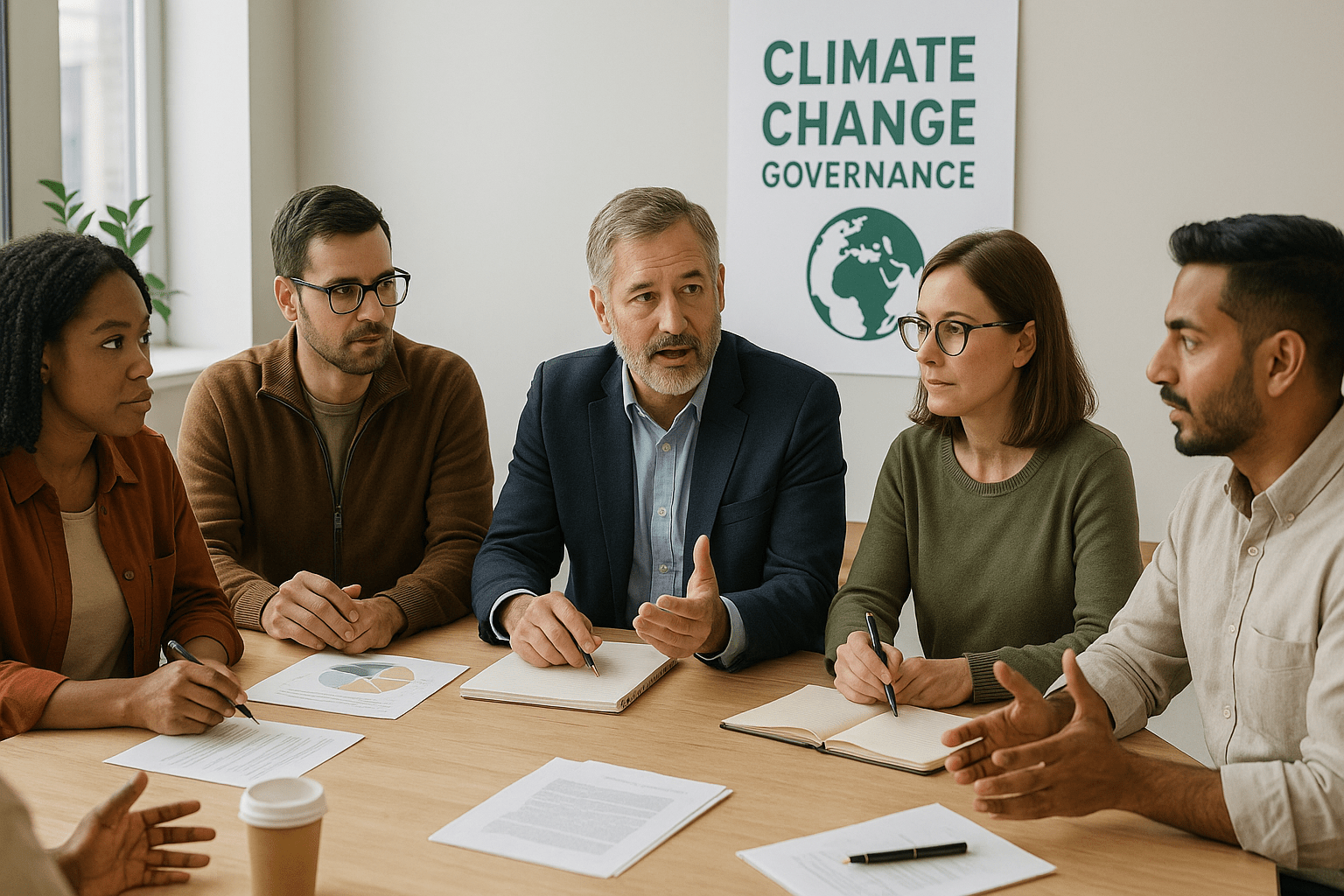
Climate Change Governance
Effective climate change governance matters now more than ever. Climate crises—from floods to fires—keep growing. Yet many traditional governments still struggle to keep up.
The Worldwatch Institute’s State of the World 2013: Is Sustainability Still Possible? makes this clear. It shows that older systems often fail during climate emergencies. Therefore, leaders must rethink how we govern. In short, we need faster, fairer, and more flexible models to face today’s challenges.
The Imperative for Adaptive Climate Change Governance
Climate change brings many crises—rising seas, stronger storms, and widespread displacement. These problems need fast and flexible responses.
But most governments move slowly. Red tape and political fights often get in the way. That’s why we must shift to systems that are adaptable and inclusive. Only then can we respond quickly and fairly.

Key Characteristics of Effective Climate Change Governance
Brian Martin, a professor of social sciences at the University of Wollongong, identifies four critical features of governance that enhance resilience during environmental crises:
- Widespread Participation: Engaging a broad spectrum of stakeholders ensures diverse perspectives and fosters collective ownership of solutions. Shared power structures encourage active involvement and also sustained commitment to climate initiatives.
- Resource Development: Proactive investment in technological, infrastructural, and communicative resources is vital. Preparedness in these areas enables societies to respond swiftly and effectively to climate-related disruptions.
- Tolerance and Inclusion: Incorporating diverse groups, including marginalized communities, into the decision-making process ensures that policies are equitable and broadly supported, reducing resistance and enhancing implementation efficacy.
- Skill Development: Education and knowledge sharing empower communities to devise innovative solutions. Decentralized governance structures that facilitate communication among autonomous units can accelerate the dissemination and application of effective strategies.
The Role of Local and Flexible Governance
Local governments and grassroots groups often move faster and connect better with communities. Because they’re close to the people affected, they can create tailored solutions that work.
They also give citizens a voice and sense of control. As a result, these local actions can spark bigger changes—shaping national policies and pushing sustainability from the ground up.
Conclusion
Addressing the complexities of climate change certainly requires a transformation in governance approaches. By embracing models that emphasize participation, resource preparedness, inclusivity, and also skill development, societies can enhance their resilience to environmental crises. Empowering local entities and also fostering flexible governance structures. They are pivotal steps toward achieving sustainable and also effective climate change mitigation and adaptation.
For more information, visit http://www.sustainabilitypossible.org.

Comments
One response to “Climate Change Governance: The Need for Change”