
Ghost Gear: The Silent Killer Threatening Our Oceans
Out in the open ocean, not all fishing gear comes back to shore. Nets, lines, and traps are often lost or abandoned—yet they keep killing long after they’re set. This dangerous debris is known as ghost gear, and it’s silently choking marine ecosystems across the globe.
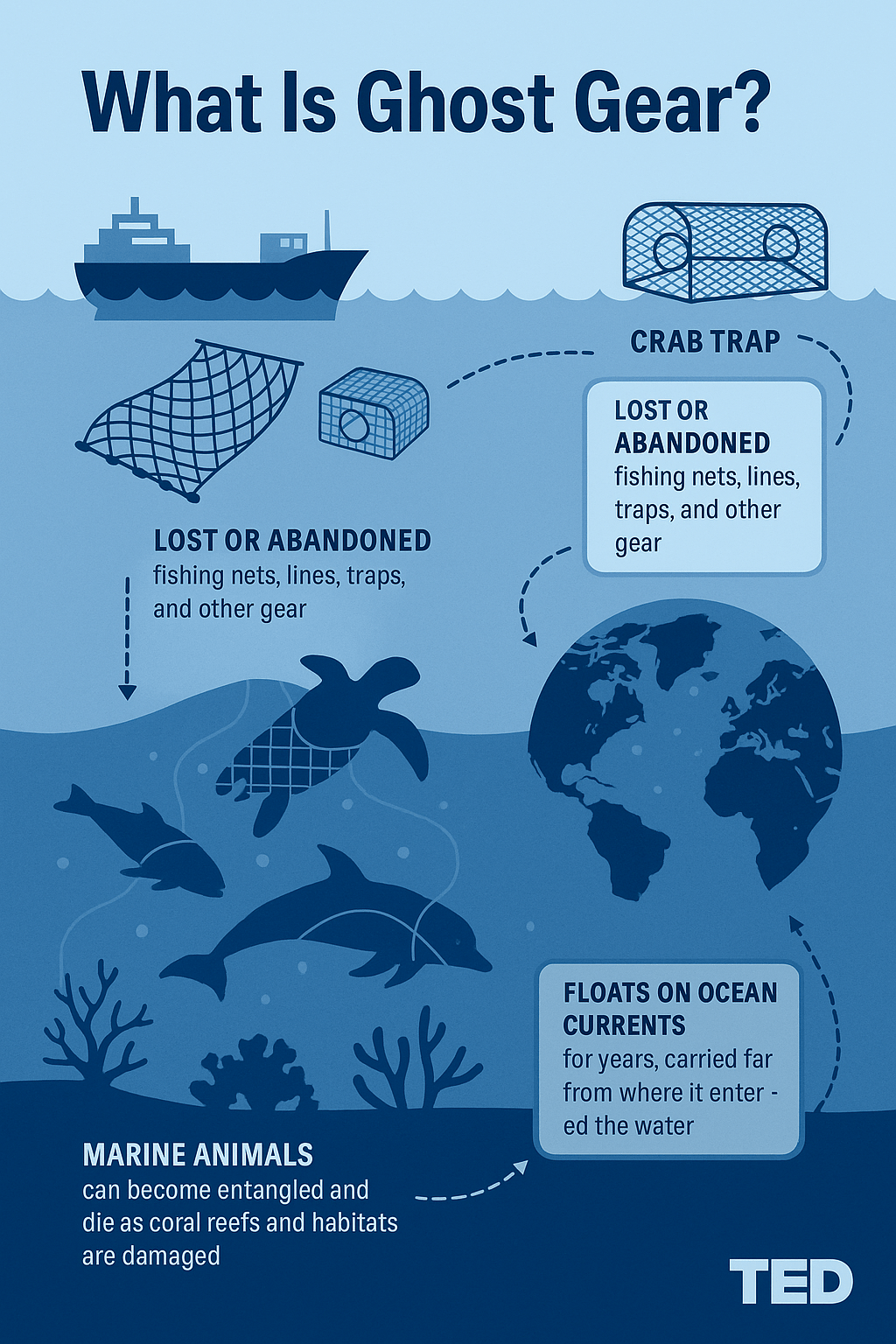
Many types of ghost gear are made from durable plastics that don’t break down for decades. Instead of disintegrating, they drift silently through the ocean, carried by currents across continents. Along the way, they entangle fish, turtles, dolphins, and even whales—trapping animals that were never meant to be caught. Coral reefs and seafloor habitats also suffer, often crushed or suffocated by nets that never stop killing.
Even worse, some animals carry ghost gear with them. Entangled whales drag lines for miles, suffering wounds and infections. Sea turtles get caught in mesh and drown before reaching the surface. The cycle continues invisibly—deadly and constant—leaving behind a trail of destruction that few ever see.

And the problem keeps growing. As industrial fishing expands and plastic-based gear becomes more common, the volume of ghost gear entering the ocean rises year after year. What was once a local issue is now a global crisis.
What Is Ghost Gear?
Ghost gear includes lost or abandoned fishing nets, crab pots, longlines, and other equipment. These materials, mostly made from plastic, don’t break down for decades. Instead, they float through the ocean, often traveling thousands of miles. Along the way, they trap marine animals and destroy fragile ecosystems like coral reefs.
Worse yet, ghost gear kills without pause. It catches and harms marine life indiscriminately. Sea turtles, whales, dolphins, seals, and countless fish get entangled or trapped. Some drown quickly. Others suffer slow, painful deaths from injuries, infection, or starvation.
Even after decades, the damage continues. Ghost gear doesn’t rest, and it doesn’t decay. It simply keeps killing.
A Global Crisis Below the Surface
According to the Food and Agriculture Organization (FAO), ghost gear makes up a major share of marine litter. Each year, an estimated 640,000 tons of fishing gear is lost at sea. That’s over a billion pounds of drifting, invisible traps—haunting our oceans and marine life.
Meanwhile, ghost gear causes physical destruction. It also crushes coral reefs and tears up seafloor habitats. Finally it clogs fishing zones and also entangles boat propellers. In fact, it can even threaten divers and underwater infrastructure.
Because it drifts across currents and borders, it’s not just a local issue. Instead, it’s a global environmental crisis. More importantly, it’s one that requires international coordination.
Why This Issue Matters
Ghost gear isn’t just a threat to marine animals. It’s also a major problem for humans. For instance, when fish, crabs, and shrimp die trapped in ghost gear, they can’t reproduce. Over time, fish stocks shrink. Local communities that depend on these waters lose income. That’s as well as food security and economic stability.
Moreover, most ghost gear is made from plastic. Over time, this plastic breaks into microplastics. These tiny particles enter the food chain. As a result, they endanger both marine health and human health.
So this isn’t just about ocean life—it’s about protecting ourselves too.
Solutions Are Within Reach
Fortunately, change is happening. Groups like the Global Ghost Gear Initiative (GGGI) exist. For they work with fishermen, governments, and NGOs to solve the problems.
Their mission is simple:
prevent gear loss, recover what’s already lost, and make polluters accountable
At the same time, innovation is helping. Some fishing fleets now use biodegradable nets that break down if lost. Others use GPS tracking tags. Especially so gear doesn’t drift away unnoticed. Financial rewards also encourage crews to bring back abandoned gear. Now that’s clearly turning waste into opportunity.
Consumers can also help too. Choosing certified sustainable seafood reduces demand for destructive practices. Cutting single-use plastic use helps. In addition, supporting ocean policy. For that also helps reduce ghost gear at its source.
Conclusion
Ghost gear is one of the deadliest forms of ocean pollution. However, it’s also one of the most preventable. If we act now, we can protect marine life. At the same time, we’ll preserve coastal economies and keep our oceans healthy for future generations.
The sea has always provided—food, jobs, and inspiration. So let’s stop leaving behind deadly traps. Let’s give something back.
Ghost Gear Sources:
- Food and Agriculture Organization (FAO) – Abandoned, Lost or Otherwise Discarded Fishing Gear (ALDFG).
- Global Ghost Gear Initiative (GGGI)
https://www.ghostgear.org - World Animal Protection – Ghost Gear: The Deadliest Form of Marine Debris
https://www.worldanimalprotection.org - United Nations Environment Programme (UNEP) – Marine Plastic Debris and Microplastics Report
- Pew Charitable Trusts – Sea of Lost Gear.

World Animal Protection’s report, Ghosts Beneath the Waves,
World Animal Protection’s Sea Change campaign works to reduce the volume of ghost gear. In addition, they also remove and recycle such gear. More importantly, they also rescues entangled animals.
Finally and for more information, please visit www.worldanimalprotection.us.org/seachange
NEW YORK, March 8, 2018 /PRNewswire-USNewswire/ — A report released by World Animal Protection
