
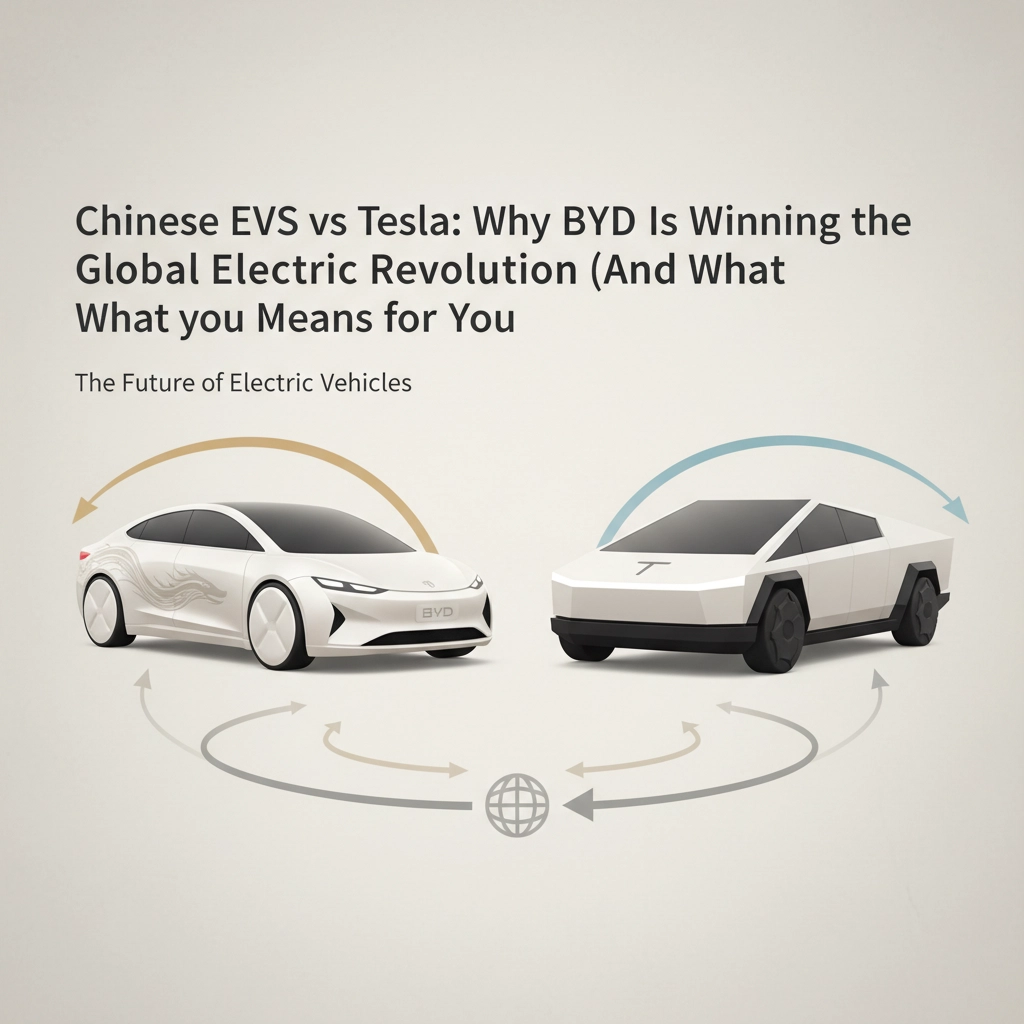
Let’s talk about BYD EV vs Tesla. Because the electric vehicle landscape just shifted dramatically. For years, Tesla dominated headlines and parking lots alike. However, when considering BYD EV vs Tesla, a Chinese automaker named BYD has quietly overtaken the EV giant. Moreover, this isn’t just about numbers on a spreadsheet. Instead, it represents a fundamental change in how we think about electric cars.
BYD sold 1.61 million battery electric vehicles in the first nine months of 2025. Meanwhile, Tesla managed 1.22 million units during the same period. That’s a commanding lead of nearly 388,000 vehicles. Furthermore, this gap continues to widen as BYD EV vs Tesla accelerates its global expansion.
The Perfect Storm: How BYD Outmaneuvered Tesla
Diversification Strategy Pays Off
Tesla bet everything on pure electric vehicles. In contrast, BYD took a different approach. The Chinese company offers both battery electric vehicles (BEVs) and plug-in hybrid electric vehicles (PHEVs). Consequently, BYD captures customers who aren’t ready for full electrification yet.
This strategy proves particularly effective in developing markets. Additionally, it works well in regions with limited charging infrastructure. Therefore, BYD reaches customers that Tesla simply cannot serve.

European Market Domination
BYD’s European expansion tells an incredible story. In October 2025, BYD EV vs Tesla sold nearly 17,500 vehicles across Europe. This represents a staggering 206.8% increase compared to October 2024. Simultaneously, Tesla’s European sales plunged 48.5% to just 6,964 vehicles.
Even more impressive, these gains happened despite EU tariffs on Chinese automakers. Nevertheless, BYD’s competitive pricing and appealing products won over European consumers. Year-to-date through October 2025, BYD’s European sales surged 285%. Meanwhile, Tesla’s local sales fell 29.6%.
Production Scale and Efficiency
BYD achieved the scale necessary to compete globally. The company expects to exceed 2 million sales for the first time in 2025. Additionally, BYD recorded more than 500,000 sales in Q4 of both 2023 and 2024.
For Tesla to match this significant milestone, it would need to increase its Q4 sales by over 50% compared to Q4 2024. This ambitious goal not only reflects the company’s growth aspirations but also underscores the competitive nature of the electric vehicle market. Given current market conditions, which are influenced by a myriad of factors including supply chain challenges, fluctuating consumer demand, and emerging competitors, this presents a particularly challenging target. Additionally, Tesla must navigate regulatory landscapes and evolving customer preferences to effectively position its products. Achieving such a substantial increase in sales would require innovative strategies in marketing, production efficiency improvements, and possibly even the introduction of new models to capture the interest of potential buyers.
Market Share Leadership Changes Everything
BYD now commands 15.4% of the global battery electric vehicle market in Q3 2025. Meanwhile, Tesla holds second place with 13.4% market share. Across all plug-in vehicle sales, BYD accounts for approximately 19-20% of the global market.
These numbers represent more than statistical victories. Instead, they signal a new era in automotive manufacturing. Chinese brands are no longer copying Western designs. Now, they’re leading innovation and setting global standards.

What This Means for Your Next Car Purchase
More Choices, Better Prices
BYD’s rise creates immediate benefits for consumers worldwide. First, increased competition drives down prices across all brands. Second, consumers now have access to a broader range of electric vehicles. Third, manufacturers must innovate faster to stay competitive.
Tesla’s previous positioning as the dominant premium EV brand faces serious challenges. Therefore, consumers can expect better value propositions from all manufacturers.
Regional Market Shifts
European consumers are witnessing unprecedented changes in available models. BYD now outsells established brands like Fiat, Dacia, and Seat in various markets. Additionally, BYD has surpassed Porsche in Europe despite Tesla’s historical dominance.
This competitive pressure accelerates innovation across the industry. Consequently, consumers benefit from improved technology and better features at every price point.
Technology Innovation Acceleration
Competition between BYD EV vs Tesla drives rapid technological advancement. BYD’s success in both BEV and PHEV markets suggests something important. Consumers worldwide may benefit from more nuanced electrification solutions. These solutions get tailored to regional infrastructure and consumer preferences.
Tesla’s recent Q3 2025 growth momentum demonstrates competitive pressure’s positive effects. The company achieved a 29.41% quarterly sales surge. This growth came from US subsidy deadlines and renewed Chinese market growth. Therefore, competition stimulates faster product development and market responsiveness.

The Bigger Picture: Global EV Market Transformation
Projected Growth Trends
Analysts project global new energy vehicle sales will reach 20.43 million units in 2025. This represents a 25% year-on-year increase. Furthermore, growth is expected to continue with 22.8 million units projected by 2026.
BYD’s leadership position allows it to capture substantial portions of this expanding market, thanks to its innovative approach and commitment to sustainable technology. As electric vehicles gain popularity and consumer preferences shift towards greener alternatives, BYD is well-positioned to take advantage of these developing trends. Furthermore, this could accelerate the shift toward Chinese automotive dominance globally, as more countries recognize the value and efficiency of electric mobility solutions, making BYD a key player in shaping the future of the automotive landscape around the world.
Infrastructure and Charging Networks
BYD’s hybrid approach addresses a critical consumer concern. Many drivers worry about charging infrastructure availability. Therefore, PHEVs provide a bridge technology that reduces range anxiety. This strategy proves particularly effective in markets with developing charging networks.
Manufacturing and Supply Chain Advantages
Chinese manufacturers benefit from integrated supply chains and lower production costs. Their strategic positioning allows them to streamline operations and reduce overhead, resulting in significant savings. Moreover, they invest heavily in battery technology and manufacturing processes, which are critical in the current green energy landscape. This commitment to innovation not only enhances their production capabilities but also leads to the development of more efficient and sustainable solutions. Consequently, they can offer competitive pricing while maintaining quality standards, which increasingly attracts both domestic and international clients looking for reliable partners in the ever-evolving market.
Environmental Impact and Sustainability
BYD’s success contributes significantly to global decarbonization efforts. The company’s vehicles prevent millions of tons of CO2 emissions annually. Furthermore, BYD’s manufacturing processes increasingly rely on renewable energy sources.
Additionally, BYD invests heavily in battery recycling and sustainable materials. This approach aligns with growing consumer awareness of environmental responsibility, as more individuals and businesses seek products that contribute positively to the planet. By focusing on innovation in recycling processes and sourcing sustainable materials, BYD not only reduces waste but also pioneers new methods that can inspire other companies in the industry. Such initiatives reflect a broader commitment to sustainability, demonstrating that profitability and environmental stewardship can go hand in hand, ultimately fostering a healthier planet for future generations.
Looking Ahead: What to Expect
Continued Market Evolution
The EV market will become increasingly competitive over the next few years, driven by technological advancements and a growing emphasis on sustainability. More Chinese manufacturers are preparing to enter global markets, bringing with them innovative designs and cutting-edge features that cater to various consumer preferences. Therefore, consumers can expect even more choices and better prices, as the influx of new players fosters healthy competition. This heightened rivalry will not only lead to a broader range of electric vehicles, from budget-friendly options to luxury models, but also encourage manufacturers to enhance their offerings in terms of performance, safety, and range. As a result, buyers will benefit from improved value and access to the latest in electric vehicle technology.
Technology Convergence
Battery technology, autonomous driving, and connectivity features will continue improving rapidly. Competition between major players accelerates this development. Consequently, tomorrow’s EVs will offer capabilities we can barely imagine today.
Regional Adaptations
Different regions will see customized approaches to electrification. Some markets will embrace full electric vehicles quickly. Others will rely on hybrid technologies for longer transition periods. Therefore, manufacturers like BYD that offer diverse options will likely maintain advantages.
The Tesla era isn’t ending, but it’s evolving. BYD’s rise represents healthy competition that benefits everyone. Consumers get better products at lower prices. The environment benefits from faster adoption of clean transportation. Moreover, innovation accelerates across the entire automotive industry.
For your next vehicle purchase, this means more options than ever before. Whether you choose Tesla, BYD, or another manufacturer, you’ll benefit from the competitive pressure driving improvements across the industry. The electric revolution is here, and it’s more exciting than anyone anticipated.
Sources:
