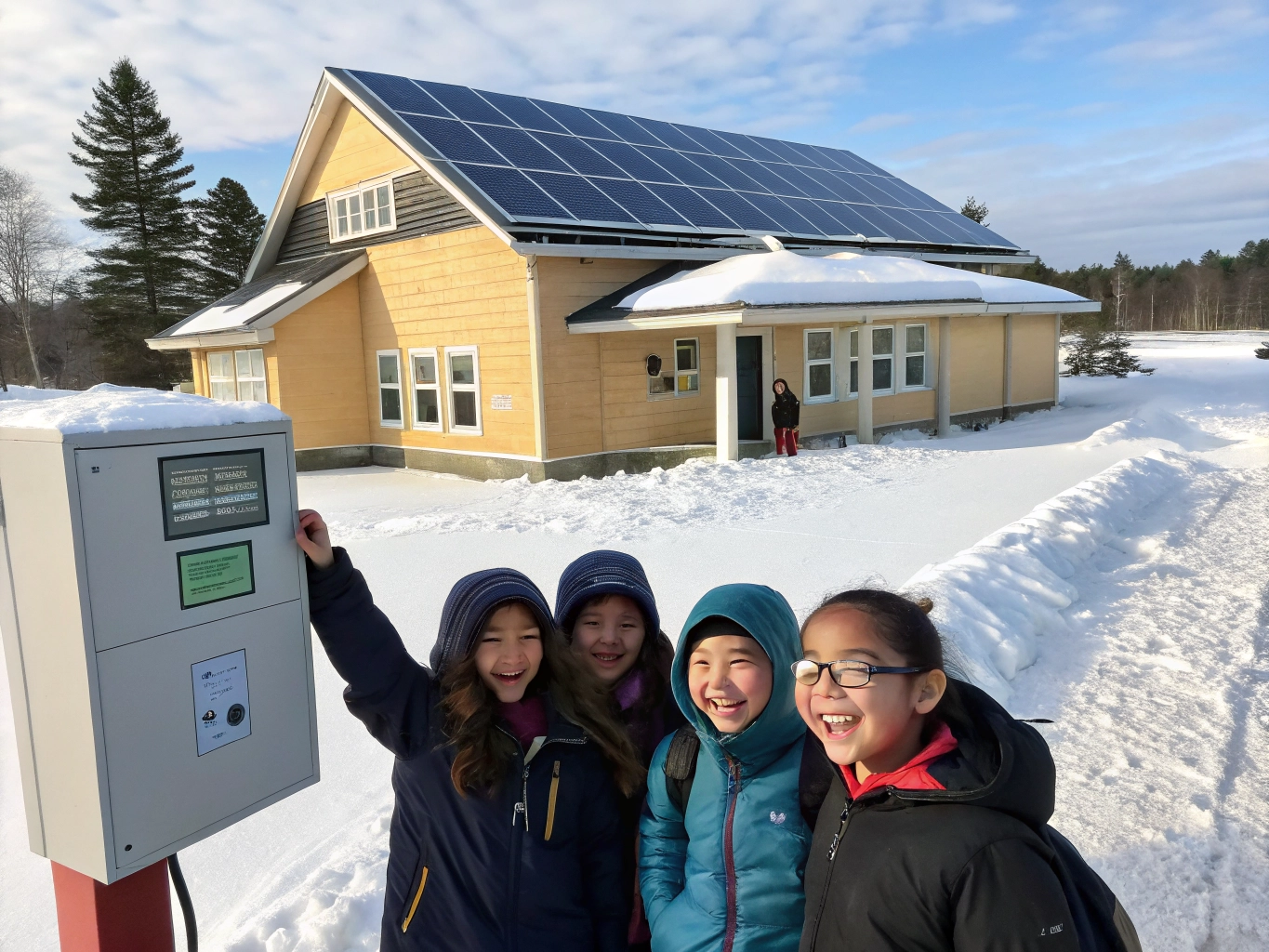
Energy independence just got a lot more local for the Pine Point community. Recently, students at the Pine Point K–8 School on Minnesota’s White Earth Reservation did something extraordinary. They gathered around a literal switch and flipped it. Consequently, they didn’t just turn on the lights; they activated a massive 2.7 MWh microgrid. This project is a game-changer for the region. It’s not just about saving a few bucks on the electric bill. Instead, it’s about resilience, safety, and a bold stand against rising energy costs.
Resilience at the Heart of the Pine Point Community
The Pine Point School is much more than a place for learning. For the White Earth Nation, it serves as a community heartbeat. Furthermore, it is a designated storm shelter. In northern Minnesota, winter storms aren’t just a nuisance; they can be life-threatening. Therefore, having a reliable power source is non-negotiable.
Before this microgrid, a major outage meant the community was vulnerable. Now, the school can operate entirely off-grid for roughly 12 hours. This provides a warm, safe space for elders and families during the worst weather. Because the system includes battery storage, the energy captured during the day stays ready for the night. Thus, the school becomes a beacon of hope when the rest of the grid goes dark.

Breaking Down the Tech: Solar Meets BESS
What does a 2.7 MWh system actually look like? To start, it begins with a 500 kW solar array. This array captures the sun’s rays and turns them into clean electricity. However, solar alone isn’t enough for true independence. You need a place to put that power. That is where the Battery Energy Storage System (BESS) comes in.
Managed by Ziegler Energy Solutions, the system features a 400 kW power rating paired with that massive 2.7 MWh battery capacity. Consequently, the school can manage its energy load with precision. They can use solar power when the sun is shining. Alternatively, they can draw from the batteries during peak hours. This setup is a prime example of solar energy battery storage solutions in North America that we’ve discussed before. It turns a simple rooftop project into a mini-utility.
Pine Point Schools Shielding Against the Data Center Boom
You might wonder why a school in rural Minnesota needs such a high-tech shield. One major reason is the massive growth of data centers. Across the country, AI and cloud computing are driving energy demand through the roof. Consequently, local utilities are often forced to raise rates to keep up.
By generating their own power, Pine Point Schools is essentially opting out of that cycle. They are hedging against future rate hikes. Therefore, the money that would have gone to an outside utility can stay in the community. It can fund teachers, supplies, and Ojibwe-language programs. Moreover, the project was developed by 8th Fire Solar and 10Power, keeping the ownership and the wealth right on the reservation. This is a classic move toward battery storage vs. rising energy demand.

Solar + Storage: The New Baseline for Pine Point Schools
For a long time, batteries were considered a “nice-to-have” add-on. Those days are over. In 2026, solar plus storage has become the new baseline for energy projects. Why? Because the economics have finally flipped. Battery prices have plummeted to record lows. Therefore, it’s often cheaper to build a microgrid than to rely on expensive peak power from the grid.
In fact, the EIA reports that nearly 80% of new utility-scale capacity this year features paired solar and battery assets. We are seeing a “solar revolution” where solar energy storage is a mass market reality. Pine Point is just the latest success story in a global trend. Whether it’s a massive tribal project or a simple solar battery light for your home, storage is the key to making renewables work 24/7.
A Lesson in Leadership
The most inspiring part of this story isn’t the hardware. It’s the education. The microgrid is integrated into the school’s curriculum. Students can watch real-time data on how much energy their school is producing. Consequently, they aren’t just learning about science; they are seeing a sustainable future in action.
Ziegler Energy Solutions is even partnering with local colleges to train the next generation of solar technicians. This project proves that green tech isn’t just for big cities or tech billionaires. It’s a tool for equity and empowerment. By taking control of their energy, the White Earth Nation is showing everyone how to build a resilient, independent future.
If you’re interested in more stories about how communities are taking back the grid, be sure to check out our Alt Energy News section for the latest updates.

Conclusion
The Pine Point Schools microgrid is a massive win for everyone involved. It keeps the lights on, keeps costs down, and keeps the community safe. Most importantly, it shows that when we pair solar with storage, we create a system that is stronger than the sum of its parts. It’s time we stop thinking of batteries as an extra and start seeing them as the heartbeat of the modern grid.
For more information on the partners and data mentioned: