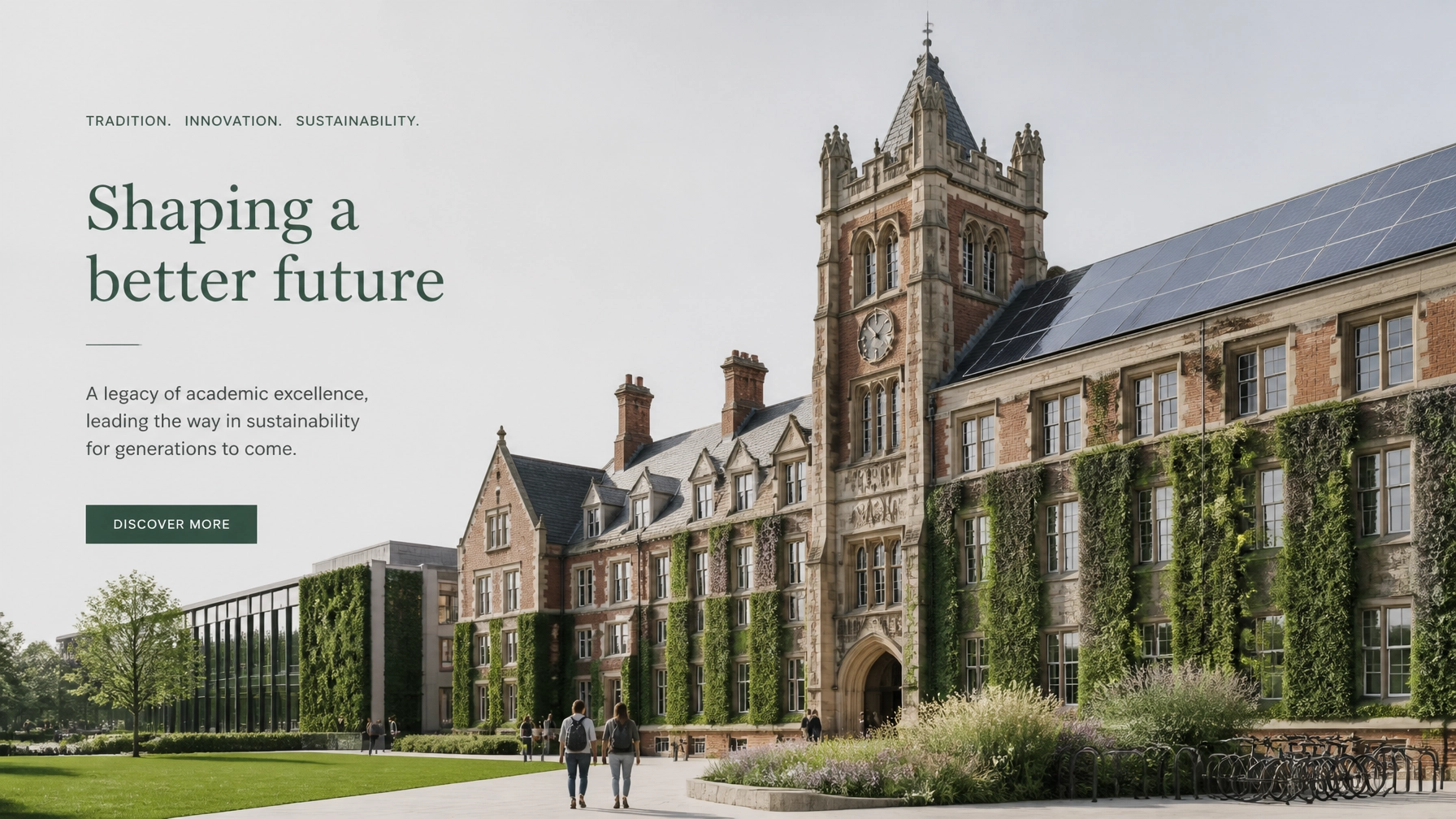
The UK University green makeover is happening. It is finally making a massive move to clean up its ivory towers. Specifically, a new £500 million partnership is set to transform the way British universities handle their carbon footprints. This isn’t just a small pilot program. Instead, it is a significant financial commitment aimed at retrofitting over 300 university buildings across the country.
Basically, Lloyds Banking Group and the National Wealth Fund (NWF) are joining forces to make this happen. For those who don’t know, the UK has some of the oldest university estates in the world. While these buildings look beautiful, they are often total energy hogs. Therefore, this new funding is exactly what the sector needs to move toward a net-zero future.
Breaking Down the £500m Green Deal for the UK University System
So, how does this deal actually work? First of all, Lloyds Banking Group is stepping up with up to £500 million in lending. However, the National Wealth Fund is the one providing the safety net. They are offering £350 million in financial guarantees to the UK University system. Consequently, this allows Lloyds to offer more flexible financing and longer loan terms to universities that might have otherwise struggled to afford these upgrades.
Moreover, the focus is laser-targeted on energy efficiency and low-carbon heating. Because many of these campus buildings still rely on old gas boilers, the shift to technology like air-source heat pumps is huge. In addition, the program will fund each UK University with better insulation, upgraded windows, and smart energy controls. Essentially, it’s about making sure these historic halls aren’t leaking heat like a sieve.

Why the UK University System Needs This Help Right Now
Actually, retrofitting older buildings is one of the toughest challenges in the built environment. According to industry experts, decarbonizing the UK University system built estates could cost billions. Universities own a massive chunk of that estate. However, they often lack the upfront capital to do deep retrofits. This is why the partnership between a major bank and a national wealth fund is so vital.
Furthermore, many schools have set ambitious net-zero targets. But, saying you want to be green is one thing; actually replacing a 50-year-old heating system is another. Therefore, this funding helps bridge that massive financial gap. As we’ve discussed before on this site, energy efficiency is essentially the world’s number one fuel source, and this program proves that the UK University system is starting to take that seriously.
The Massive Boost for Jobs and Local Chains
Interestingly, this project isn’t just about saving energy. It’s also a huge win for the economy. Specifically, the National Wealth Fund expects this initiative to create or support around 4,000 jobs. These are high-skilled roles in retrofitting, engineering, and green construction. Consequently, local supply chains are going to see a major boost as these projects roll out across the UK University system.
Additionally, this creates a “ripple effect” in the community. When a UK university upgrades its heating systems, it creates demand for local contractors. Furthermore, it helps train a new generation of workers in green technologies. For instance, installing heat pumps requires specific skills that are in high demand. By funding these projects at scale, the UK is effectively building the workforce it needs for a sustainable future.

A National Wealth Fund with Big Ambitions for the UK University System
Meanwhile, this university program is just one piece of a much larger puzzle. The National Wealth Fund recently shared its five-year plan. In fact, they aim to drive over £100 billion of investment into the UK economy by 2031. Their main goal is to finance the climate transition. Therefore, we should expect to see more of these kinds of “private-public” partnerships in the coming years.
Moreover, this isn’t the first time Lloyds and the NWF have teamed up. They previously launched a £1 billion initiative to make social housing more energy efficient. Consequently, they are using the same successful model for the education sector. It shows that they have a proven strategy for de-risking green investments. For more updates on these types of initiatives, you can always check out our alternative energy news section.
The Built Environment and Net-Zero Goals for the UK University System
In addition to the immediate benefits, this program helps the UK meet its broader net-zero targets. The built environment is responsible for a huge portion of global emissions. However, we often focus on cars and power plants while ignoring the buildings we live and work in. Specifically, older buildings are the hardest to fix. Therefore, using materials like natural wool insulation or advanced heat recovery systems is essential.
Furthermore, this move makes UK universities more competitive. In a world where students are increasingly conscious of climate change, a “green campus” is a major selling point. Essentially, a university with a low carbon footprint is going to attract more talent and more research funding. Consequently, this investment is as much about the future of British education as it is about the environment.

What to Expect Next
So, what does the timeline look like? Now that the funding is unlocked, we expect universities to start applying for these loans almost immediately. Because the National Wealth Fund is involved, the application process should be more streamlined than traditional commercial lending. Furthermore, the first phase of retrofits will likely focus on the “low-hanging fruit”: things like LED lighting and simple insulation.
However, the real transformation will come from the deep retrofits. Specifically, replacing entire district heating networks with low-carbon alternatives is a multi-year process. Therefore, we will likely see these 4,000 jobs being sustained over several years. It is a long-term play for a long-term problem.
Final Thoughts on the £500m Makeover
Ultimately, this is a win-win-win situation. First, the environment wins because we are cutting carbon emissions from hundreds of buildings. Second, the universities win because they get lower energy bills and modernized facilities. Third, the local economy wins because of the massive job creation.
Basically, this partnership shows what is possible when the government and private banks work together. Instead of waiting for a miracle technology, they are using the tools we already have to fix the buildings we already own. It’s practical, it’s scalable, and it’s exactly what green living is all about.
If you are a student or faculty member at a UK university, keep an eye on your campus. You might see some major green changes coming to your lecture hall very soon!
Outside Source Links: