Electric fuel vehicle fleets in transportation are essential for moving goods, providing services, and keeping businesses connected. Because most fleets contribute to fuel consumption and greenhouse gas emissions. Improving fleet sustainability requires more than replacing conventional vehicles with electric models. Organizations can reduce environmental impact through smarter vehicle selection and better use of data.
Electric Fuel Vehicles Start With Fleet Efficiency
Before investing in new vehicles, fleet managers can examine how existing assets are being used. Telematics systems can identify excessive idling, inefficient routes, speeding, and vehicles traveling below capacity.

Route optimization can reduce unnecessary mileage by assigning vehicles based on location and capacity. Consolidating deliveries may also decrease the number of trips required. For service fleets, scheduling technicians geographically can reduce travel between appointments.
Vehicle maintenance matters as well. Proper tire inflation, regular oil changes, wheel alignment, and timely engine repairs can support fuel efficiency while extending vehicle life.
Match Alternative Fuels to the Operation
Electric vehicles can reduce tailpipe emissions, but they are not equally practical for every fleet. Daily mileage, payload, charging availability, climate, and vehicle downtime should all influence purchasing decisions.
Some fleets may benefit from introducing electric vehicles first on predictable urban or regional routes. Others may use hybrids or alternative fuels while waiting for electric options that better fit heavy-duty applications.
Organizations operating multiple electric vehicles also need a charging strategy. Tools such as charger management software can help track charging activity and schedule charging during periods that better align with operational needs or electricity rates.
Consider the Entire Vehicle Life Cycle
Sustainability decisions should account for more than fuel consumption. Manufacturing vehicles requires raw materials and energy, so replacing functioning vehicles prematurely can carry environmental costs.
Fleet managers can evaluate total life cycle impact when determining replacement schedules. Repair history, fuel consumption, emissions, resale value, and expected remaining service life provide useful information for deciding when replacement makes sense.
Responsible disposal also matters. Batteries, tires, fluids, and vehicle components should be recycled or processed through appropriate channels whenever possible.
Measure Progress With Useful Data
Clear metrics help organizations determine whether sustainability initiatives are working. Useful measures include fuel consumed per mile, idle time, total mileage, electricity consumption, vehicle utilization, and emissions per delivery or service call.
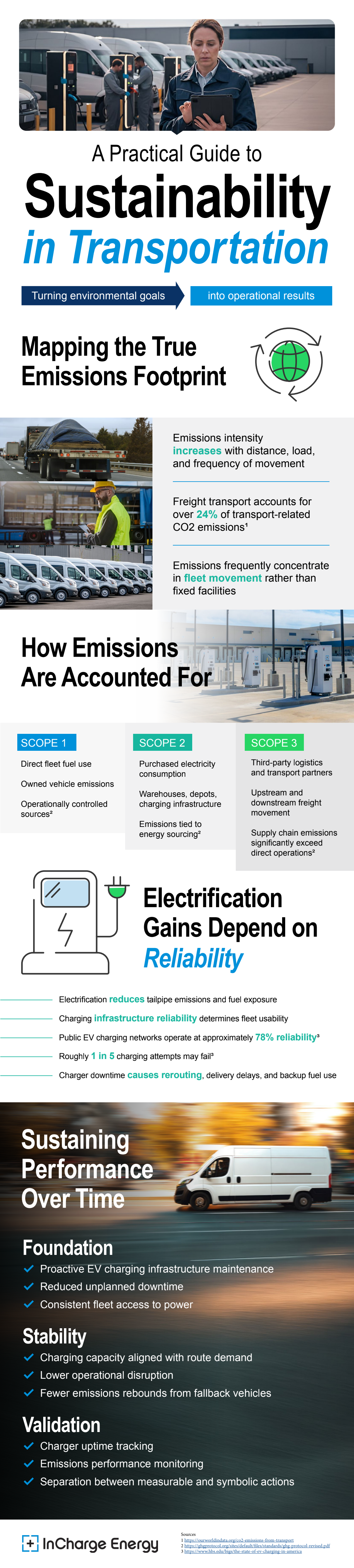
Sustainable fleet transportation develops through practical improvements made across the entire operation. Efficient routing, appropriate vehicle choices, responsible maintenance, thoughtful electrification, and accurate performance data can reduce environmental impact without sacrificing reliability. Look over the infographic below for more information.