
Renewable energy sources such as solar and wind power have been gaining momentum in recent years. Especially as the world strives to transition to a more sustainable and environmentally-friendly energy system. The National Renewable Energy Laboratory (NREL) has released its 2023 Standard Scenarios. They are providing insights into the potential growth and impact of these renewable energy sources. More importantly and through on the U.S. electricity sector through 2050. In this article, we will explore the key findings of the NREL report. More noteworthy, we will now delve into the future possibilities of solar and also wind power.
The NREL Standard Scenarios for solar and wind power
The NREL Standard Scenarios is an annual report. It’s a report that uses the Regional Energy Deployment System (ReEDS) model. That’s most commonly used to project the future of the U.S. electricity sector. It’s also based on various scenarios. These scenarios consider factors such as technology costs, performance and also policy changes. The 2023 edition of the report presents 53 possible futures for solar and wind energy. They are also including a baseline scenario called the Mid-case. All of these scenarios reflect current trends and conditions.
Solar Power: A Shining Future
According to the Mid-case scenario of the NREL report, solar power is expected to experience significant growth; especially by 2050. The report projects that solar installations could reach a capacity of 1,100 GW. That’s also a ten-fold increase from current levels. This expansion in solar power generation can be attributed to the decreasing costs of photovoltaic (PV) panels. Furthermore, it includes advancements in solar technology.
Solar power offers several advantages. That’s including its abundance, scalability, and also it’s low environmental impact. As the cost of solar panels continues to decrease. Most notably for more individuals. In addition to businesses and also communities adopting solar energy. Especially as a viable and also a sustainable alternative. Solar installations can be integrated into rooftops, open spaces, and even floating platforms, maximizing the utilization of available land and resources.
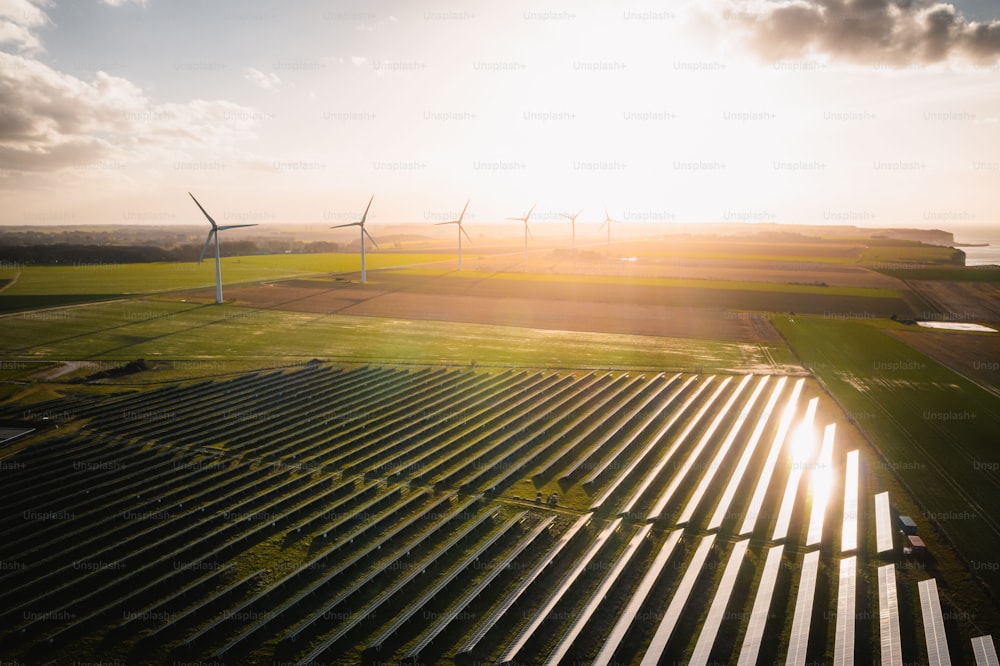
Image Source: Unsplash
Wind Power: Harnessing the Power of the Wind
Wind power is another renewable energy source that is set to play a significant role in the future of the U.S. electricity sector. The NREL report predicts that wind installations could reach a capacity of 750 GW by 2050. Now that’s a five-fold increase from current levels. This growth can be attributed to the advancements in wind turbine technology, increasing turbine sizes, and the development of offshore wind farms.
One of the key advantages of wind power is its ability to generate electricity consistently, making it a reliable source of renewable energy. Wind turbines can be installed on land or offshore, taking advantage of strong wind resources. The development of offshore wind farms opens up vast untapped potential, especially in coastal areas, where strong and consistent winds prevail.
The Role of Natural Gas and Other Technologies
While solar and wind power are expected to dominate the future energy landscape, the NREL report also highlights the role of other technologies. That’s including natural gas with carbon capture. Also coal with carbon capture, hydrogen combustion turbines, and small nuclear reactors. Solar and wind power technologies are currently playing a limited role. So they have the potential to contribute significantly to decarbonized futures. All with breakthroughs in cost and performance or the implementation of emissions constraints.
Natural gas, in particular, continues to be a part of the energy mix. That’s with the report projecting an increase in natural gas capacity under current policies. However, the emphasis on natural gas capacity expansion is driven more by the need for firm capacity rather than generation. As the electricity sector transitions towards a cleaner and more sustainable future, the role of natural gas may evolve to include carbon capture technologies to reduce greenhouse gas emissions.
The Path to Decarbonization with solar and wind power
One of the primary goals of the NREL Standard Scenarios is to assess the potential for decarbonization in the U.S. electricity sector. The report highlights that across all scenarios. However, there is a significant decrease in electricity sector emissions through the mid-2030s using solar and wind power. In the Mid-case scenario, annual CO2 emissions decrease by 81% by 2035, relative to emissions in 2005.
While these emissions reductions are commendable, they are not sufficient to phase out clean energy tax credits introduced in the Inflation Reduction Act (IRA). The NREL report suggests that in most scenarios with current policies, the emissions threshold required to phase out clean energy tax credits and is never passed, resulting in their persistence through 2050.
To achieve higher levels of decarbonization, additional policies and measures may be necessary. The report indicates that achieving 95% net decarbonization by 2050 would result in a 0.5% increase in present-value bulk electric sector costs, while achieving 100% net decarbonization by 2035 would increase costs by 14%.
Changes in the 2023 Scenarios
Compared to the previous edition of the NREL Standard Scenarios, the 2023 scenarios introduce several impactful changes. The report projects higher electricity demand in many regions, with some areas becoming winter-peaking. This shift in demand patterns necessitates adjustments in energy generation and distribution infrastructure.
Additionally, the costs associated with interconnecting renewable generators to the grid have increased. This highlights the need for continued investment in grid infrastructure to support the growth of solar and wind power installations.
The 2023 scenarios also include the introduction of growth penalties, which account for the challenges and limitations associated with rapid renewable energy deployment. These penalties aim to address potential issues such as land constraints, environmental impacts, and community acceptance.
Furthermore, the report incorporates the inclusion of electricity-produced hydrogen as a nascent technology. Hydrogen combustion turbines offer a promising avenue for storing and utilizing excess renewable energy, further enhancing the reliability and flexibility of the electricity grid.
Conclusion
The NREL Standard Scenarios provide valuable insights into the future of solar and wind power in the U.S. electricity sector. The projections indicate significant growth in solar and wind installations, as well as the potential role of other technologies in decarbonized futures. Achieving higher levels of decarbonization requires additional policies and measures, but the transition towards renewable energy sources offers numerous benefits, including reduced emissions and increased energy independence. As we move forward, it is crucial to continue investing in research, development, and infrastructure to realize the full potential of solar and wind power in shaping a sustainable future.


