Electric Vehicles: What It Means for Drivers and the Industry
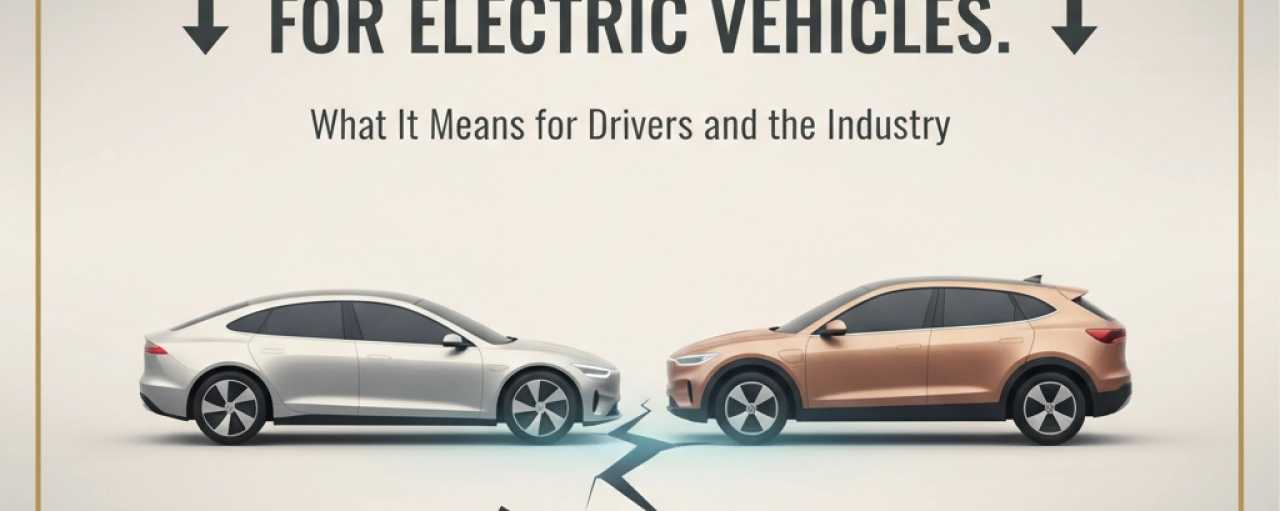
An electric vehicle price war can improve some deals, but its outcome is not guaranteed. Incentive changes, lease maturities, production decisions, financing costs, and local demand can all affect EV prices.
Multiple factors are converging to create this pricing battlefield. However, the biggest catalyst is already here – and it’s about to get much worse.
Electric Vehicle Price War: The Tax Credit Cliff Has Arrived
Federal clean-vehicle credits are unavailable for vehicles acquired after September 30, 2025. Earlier qualifying acquisitions may still have separate placement-in-service and filing requirements. That federal cutoff does not mean every state, utility, or manufacturer incentive has ended.
J.D. Power’s November 2025 report described a sharp October reversal after buyers accelerated purchases ahead of the credit cutoff. Its reported monthly EV share fell from 12.9% in September to 6.0% in October. These are dated observations, not a current monthly sales or price reading.
Manufacturers can change lease and purchase incentives in response to demand. A zero-down advertisement does not necessarily eliminate fees, taxes, the first payment, or other amounts due at signing. Check the complete offer and its expiration date.

A Tsunami of Used EVs Is Coming
Lease maturities were another reason analysts expected more used-EV supply in 2026. That expectation should now be evaluated against actual local inventory, rather than described as a future event without a date.
In its November 2025 report, J.D. Power projected 243,000 franchise EV leases ending in 2026, more than three times its 2025 comparison. This is a forecast for a defined market segment—not a count of all EV leases or a guarantee that every vehicle becomes retail inventory.
Off-lease vehicles differ in model year, trim, mileage, battery condition, warranty, and rated range. A three-year-old EV does not automatically have strong battery health or more than 250 miles of usable range. Inspect the specific vehicle and its records.
Additional supply in the used-EV market can put downward pressure on prices, but demand, financing, vehicle mix, and regional availability also matter. Prices do not have only one possible direction.
Automakers Are Feeling the Pressure
Major manufacturers are already cutting back production and investments. General Motors announced layoffs and put $2 billion in battery plant investments on hold. Ford scaled back its electric truck production. Kia delayed several EV launches.
These companies built their strategies around sustained government subsidies. Now they’re discovering that the electric vehicle price war market looks very different without taxpayer support.
Furthermore, international competition is heating up. Chinese EV manufacturers like BYD are aggressively expanding globally. Although tariffs provide some protection for domestic automakers, they can’t shield the industry from fundamental market forces.

The Global Trade Landscape Complicates Things
Tariffs targeting Chinese EVs add another layer of complexity. The U.S. government imposed these measures to protect domestic manufacturers. However, they also limit consumer choice and keep prices artificially high.
Additionally, broader trade tensions affect the entire automotive supply chain. Agriculture sanctions and other international disputes create uncertainty that makes long-term planning difficult for automakers.
European manufacturers face similar challenges. They’re caught between aggressive Chinese competition and their own transition away from internal combustion engines.
What This Means for EV Shoppers
Used-EV prices vary widely by vehicle, condition, mileage, location, and reporting date. An undated national average should not be treated as today’s price or as a like-for-like comparison with gasoline vehicles.
This represents a complete reversal from just two years ago. Back then, used EVs commanded significant premiums due to limited supply. Now, supply is catching up with demand, and electric vehicle price wars reflect true market dynamics.
A larger pool of used EVs may create opportunities, but neither a $20,000–$30,000 price range nor any particular future discount is assured. Compare current listings for equivalent vehicles and include fees and financing.
Research the specific model’s battery warranty, recalls, charging compatibility, service access, and condition. If a vehicle is needed now, compare available options against the cost and uncertainty of waiting.

The Industry’s Survival Challenge
For automakers, this electric vehicle price war poses existential questions. Can they survive margin compression without destroying profitability? Will they need to fundamentally restructure their business models?
Tesla, with its integrated manufacturing and direct sales approach, may be better positioned than traditional automakers. However, even Tesla faces pressure as competition intensifies and government support disappears.
Dealers face changes in incentives, new electric vehicle demand, and used inventory. Lease returns can create both sales opportunities and competition for new vehicles; the effect depends on the dealership and its market.
Long-Term Growth Despite Short-Term Pain
Surprisingly, the International Energy Agency still forecasts strong EV growth through 2030. This prediction seems counterintuitive given current market volatility.
However, the fundamentals supporting EV adoption remain strong. Battery costs continue falling. Charging infrastructure keeps expanding. Most importantly, total cost of ownership increasingly favors electric vehicles.
The current price war may actually accelerate adoption by making EVs affordable without subsidies. This creates a more sustainable market based on genuine economic advantages rather than government support.

Strategic Advice for Consumers
For an EV purchase, match the vehicle and budget to your needs. Waiting may improve or worsen the available deal; no forecast can guarantee the best purchase date.
Compare specific used vehicles rather than rely on a model name such as Tesla Model 3 alone. Check recall completion, remaining warranty, battery condition, repair history, charging compatibility, and an itemized price.
For a later purchase, monitor actual vehicles and inventory alongside total transaction costs. Treat lease-return projections as context rather than a promise of oversupply or exceptional discounts.
Additionally, consider total cost of ownership rather than just purchase price. Factor in fuel savings, maintenance costs, and potential resale value when making decisions.
The Road Ahead
This electric vehicle price war represents more than just market adjustment. It’s a fundamental shift toward a subsidy-free electric vehicle market.
While painful for manufacturers and dealers, this transition will ultimately benefit consumers and create a more sustainable industry. Companies that adapt quickly to new market realities will thrive. Those that rely on government support may struggle.
The next 18 months will be crucial for the industry. Winners and losers will emerge based on their ability to compete on price and value rather than subsidies.
For consumers, it’s an exciting time to consider making the switch to electric. The combination of falling prices, improving technology, and expanding infrastructure makes EVs more attractive than ever.

Sources:
- Inside Climate News – Electric Vehicle Market Analysis
- CleanTechnica – EV Industry Trends
- International Energy Agency – Global EV Outlook
Tesla’s pricing and market position have evolved since its notable 2018 Model 3 sales period.
Editor’s note — October 16, 2026: Clarified the federal-credit acquisition cutoff using IRS instructions and dated the lease-maturity and October 2025 observations using J.D. Power’s November 2025 report. Corrected unsupported price, battery-condition, and purchase-timing guarantees. Forecasts are distinguished from current inventory, and buyers should compare complete offers.